Ahmedabad
08048030633
+919711250432
HDPE Spigot Fittings by CPI

HDPE SPIGOT TEE

Phone Number

08048030633

Please keep 0 before dialling the number.

Mon-Thu: 10 AM - 2 PM • Fri: 3 PM - 7AM

Other Website Visit our other website
Address B - 127, Sumel Business Park -7, Nr. Soni Ni Chal, Rakhial, Ahmedabad - 380023

Ahmedabad, India, 380023

Description

An HDPE (High-Density Polyethylene) spigot tee is a type of pipe fitting used in HDPE piping systems to create a branch or intersection in the pipeline. The term "spigot tee" describes the specific design and function of this fitting: 1. **Material**: HDPE spigot tees are typically made from high-density polyethylene, a plastic known for its excellent chemical resistance, durability, and strength. HDPE is commonly used in various piping applications due to its versatility and performance characteristics. 2. **Design**: The spigot tee has a spigot or male end that can be inserted into an HDPE pipe, and it has three openings or branches, with one branch extending perpendicularly from the main pipe. This design allows for the branching of the pipeline at a 90-degree angle. 3. **Connection**: Spigot tees are typically connected to the HDPE pipes using methods such as butt fusion or electrofusion. These methods involve heating the ends of the pipes and the spigot tee, allowing them to fuse together to create a strong, leak-resistant connection. 4. **Applications**: HDPE spigot tees are used in a variety of applications where the pipeline needs to branch off in different directions. They are commonly used in water supply systems, wastewater management, industrial processes, and agricultural irrigation. Spigot tees help facilitate the distribution of fluids within the HDPE pipeline while maintaining the structural integrity of the system. In summary, an HDPE spigot tee is a pipe fitting that is used to create a branch or intersection in an HDPE piping system, allowing for the diversion of fluid flow in a 90-degree direction. These fittings are important components in the construction and maintenance of HDPE pipelines, offering durability and resistance to corrosion and chemicals.

Keywords

Other Products

view all

6814772a5d263414004dd4a4 Card 2

product image
HDPE Spigot Fittings

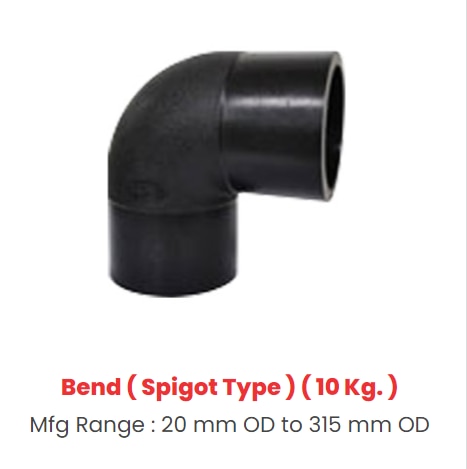
An HDPE spigot 45-degree elbow is a specific type of pipe fitting used in HDPE (High-Density Polyethylene) piping systems. This elbow fitting is designed to change the direction of the pipeline by 45 degrees. The term "spigot" in this context indicates that one end of the elbow has a male or spigot-like extension that can be inserted into an HDPE pipe for a secure and leak-resistant connection. Here are the key features and aspects of an HDPE spigot 45-degree elbow: 1. **Material**: These elbows are typically made from high-density polyethylene (HDPE), a strong and durable plastic known for its resistance to corrosion, chemicals, and wear. 2. **Design**: The 45-degree elbow has a design that allows it to redirect the flow of fluids in an HDPE piping system by 45 degrees. It typically has a long, spigot or male end on one side and a socket or female end on the other. The spigot end can be inserted into the HDPE pipe, while the socket end receives the next segment of the pipeline. 3. **Connection**: Spigot 45-degree elbows are connected to the HDPE pipes using fusion methods, such as butt fusion or electrofusion. These methods involve heating the pipe ends and the elbow and fusing them together to create a strong, leak-resistant joint. 4. **Applications**: HDPE spigot 45-degree elbows are used in various applications where changes in direction are required within HDPE piping systems. They are commonly used in water supply and distribution systems, sewage and wastewater management, industrial processes, and agricultural irrigation, among others. In summary, an HDPE spigot 45-degree elbow is a specific type of pipe fitting designed for use in HDPE piping systems to change the direction of fluid flow by 45 degrees. These fittings are essential for creating efficient pipeline layouts while maintaining the structural integrity and leak resistance of the HDPE pipeline. They are valued for their durability, resistance to chemicals, and longevity in various applications.

6814772a5d263414004dd4a4 Card 2

product image
HDPE Spigot Fittings

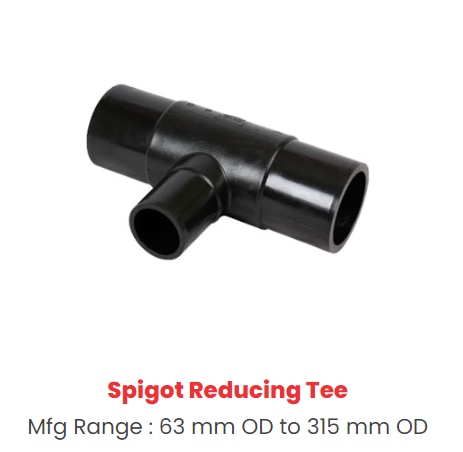
An HDPE (High-Density Polyethylene) spigot reducing tee is a type of pipe fitting used in HDPE piping systems to create a branching intersection between three pipes of varying diameters, with one of the branches having a different size than the others. The term "spigot reducing tee" describes the specific design and function of this fitting. Here's more information about HDPE spigot reducing tees: 1. **Material**: HDPE spigot reducing tees are typically made from high-density polyethylene, a durable and corrosion-resistant plastic widely used in various piping applications. 2. **Design**: A spigot reducing tee has three openings or branches. Two of these branches have the same diameter, and the third branch has a smaller diameter. The two larger branches are designed to receive the larger-diameter HDPE pipes, and the smaller branch accommodates the smaller-diameter HDPE pipe. The "spigot" end of the tee can be inserted into one of the larger pipes to create a secure and leak-resistant connection. 3. **Connection**: Spigot reducing tees are joined to the HDPE pipes using fusion methods, such as butt fusion or electrofusion. These methods involve heating the ends of the pipes and the spigot reducing tee and fusing them together, ensuring a strong and homogeneous connection. 4. **Applications**: HDPE spigot reducing tees are used in situations where a pipeline needs to branch into two different-sized pipes. This is common in water supply systems, wastewater management, industrial processes, and other applications where fluid distribution and direction changes are required while maintaining the structural integrity and leak resistance of the HDPE pipeline. Spigot reducing tees are important components in HDPE piping systems, allowing for the efficient branching of pipelines while adapting to changes in pipe size. These fittings are valued for their durability, resistance to corrosion, and chemical compatibility, making them suitable for a wide range of applications.

6814772a5d263414004dd4a4 Card 2

product image
HDPE Spigot Fittings

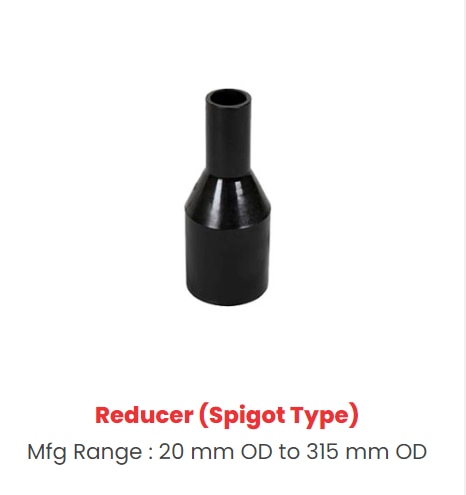
An HDPE (High-Density Polyethylene) spigot reducer is a specific type of spigot or male-female pipe fitting used in HDPE piping systems to connect two pipes of different diameters. The primary purpose of an HDPE spigot reducer is to transition from a larger-diameter HDPE pipe to a smaller-diameter HDPE pipe, or vice versa, while maintaining a secure and leak-resistant connection. Here are the key features and aspects of an HDPE spigot reducer: 1. **Material**: HDPE spigot reducers are typically made from high-density polyethylene, a type of plastic known for its exceptional durability, chemical resistance, and corrosion resistance. HDPE is a common material for various applications in the piping industry. 2. **Design**: The HDPE spigot reducer has a tapered design, with one end having a spigot or male section that fits into the larger-diameter HDPE pipe, and the other end having a socket or female section that accommodates the smaller-diameter HDPE pipe. This design allows for a secure, sealed connection between pipes of different sizes. 3. **Connection**: Spigot reducers in HDPE piping systems are typically joined to the pipes using fusion techniques. Butt fusion is a common method for connecting HDPE pipes and fittings, which involves heating the pipe ends and the spigot reducer to melt the material, and then fusing them together as they cool. This results in a strong, homogeneous joint. 4. **Applications**: HDPE spigot reducers are used in a variety of applications, including water supply and distribution systems, wastewater management, industrial processes, and agricultural irrigation. They are crucial for adapting pipe sizes within HDPE pipelines, ensuring the efficient and reliable flow of fluids. In summary, an HDPE spigot reducer is a specific type of pipe fitting designed for use in HDPE piping systems to transition from a larger-diameter HDPE pipe to a smaller-diameter HDPE pipe or vice versa. These fittings are essential for maintaining the structural integrity and leak resistance of HDPE pipelines while accommodating changes in pipe size.